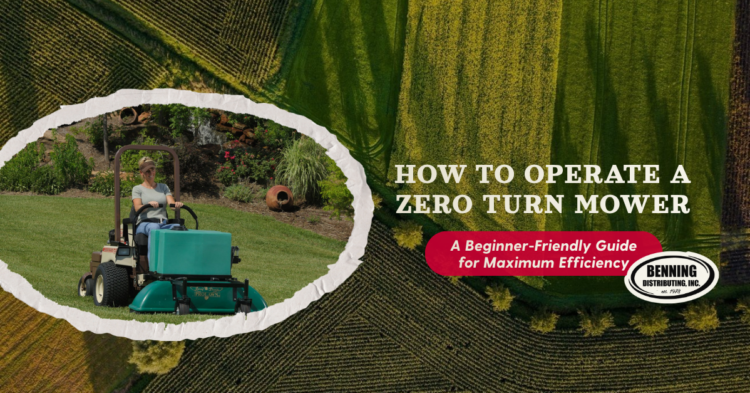
How to Operate a Zero Turn Mower: A Beginner-Friendly Guide for Maximum Efficiency
As the mowing season kicks off in Central & Southern Illinois, crews are getting back into full swing. Grass is growing fast, schedules are filling up, and for many operators (especially new hires or first-time users) there’s one key challenge: Learning how to operate a zero turn mower efficiently and safely.
Zero-turn mowers are one of the most powerful tools in commercial landscaping. They allow you to move faster, cut cleaner, and handle large properties with ease. But if you don’t know how to use them properly, they can lead to:
- Turf damage
- Slower job completion
- Operator fatigue
- Even safety risks
This guide will walk you through everything you need to know (from basic controls to advanced techniques) so you can operate a zero-turn mower with confidence and maximize efficiency from day one.
Understanding How Zero-Turn Steering Works
Before jumping on the mower, it’s important to understand what makes zero-turn machines different. Unlike traditional riding mowers that use a steering wheel, zero-turn mowers use dual lever steering. Each lever controls one rear wheel independently.
How It Works:
- Push both levers forward – move straight ahead
- Pull both levers back – reverse
- Push one lever more than the other – gradual turn
- Push one forward and pull one back – sharp zero-radius turn
This design allows the mower to pivot in place, making it incredibly efficient for:
- Tight spaces
- Obstacle-heavy properties
- Large commercial areas
However, this same responsiveness is why beginners often struggle at first.
If you’re exploring high-performance commercial options, check out available models through Benning Distributing to see how professional-grade machines are designed for smoother control.

Getting Familiar with the Controls
Before starting the mower, take a few minutes to understand the main components.
Key Controls Include:
- Steering levers – control movement and direction
- Throttle – controls engine speed
- Ignition switch – starts the mower
- PTO (blade engagement) – turns blades on/off
- Parking brake – secures the mower when stationary
- Deck height adjustment – sets cutting height
Every model is slightly different, but the fundamentals remain the same.
Pro Tip: Always review the manufacturer’s manual before operating a new mower. For general safety and operation standards, you can also refer to Outdoor Power Equipment Institute.
Step-by-Step: How to Start and Drive a Zero Turn Mower
Now let’s break down the process step by step.
Step 1: Pre-Start Check
Before turning the key:
- Ensure the parking brake is engaged
- Check fuel levels
- Make sure blades are disengaged
- Confirm the area is clear
Step 2: Starting the Mower
- Sit properly in the operator’s seat
- Engage the parking brake
- Set throttle to mid position
- Turn the ignition key
Let the engine warm up for a minute before moving.
Step 3: Moving Forward
- Release the parking brake
- Slowly push both steering levers forward
Start slow, this is where beginners often make mistakes by applying too much pressure.
Step 4: Turning
To turn smoothly:
- Push one lever slightly more than the other
- Avoid sudden movements
Gradual input = smoother turns and cleaner results.
Step 5: Stopping
- Bring both levers back to neutral
- Engage the parking brake
Step 6: Engaging the Blades
Once you’re comfortable moving:
- Increase throttle
- Engage the PTO switch
Now you’re ready to mow.
Turning Techniques: Avoid Turf Damage
One of the biggest mistakes beginners make is damaging the turf while turning.
Why It Happens:
Zero-turn mowers can pivot in place, but doing this on grass (especially in Central & Southern Illinois where soil can be soft) can tear up the turf.
Best Practices:
- Avoid spinning in place on grass
- Use gradual turns instead of sharp pivots
- Slow down before turning
- Lift slightly off the turn when needed
Pro Technique: The “Three-Point Turn”
Instead of a hard pivot:
- Slow down
- Turn slightly
- Adjust direction gradually
This protects the grass and keeps your work looking professional.
Safety Tips Every Operator Should Follow
Safety should always come first, especially with powerful commercial equipment.
Key Safety Tips:
- Always wear protective gear (boots, eye protection, etc.)
- Never operate on steep slopes without proper technique
- Keep hands and feet away from moving parts
- Turn off the mower before making adjustments
- Be aware of surroundings at all times
Considerations:
- Wet grass can increase slipping risk
- Uneven terrain requires extra control
- Hidden obstacles (roots, rocks) can cause sudden movement
Being cautious helps prevent both accidents and equipment damage.
Common Mistakes Beginners Make
Learning how to drive a zero turn mower takes practice. Here are the most common mistakes to avoid:
1. Overcorrecting Steering
New operators often push one lever too far, causing jerky movements.
Fix: Use small, controlled inputs.
2. Moving Too Fast Too Soon
Speed is tempting, but it reduces control.
Fix: Start slow and build confidence.
3. Spinning on the Same Spot
This damages turf and looks unprofessional.
Fix: Use gradual turns.
4. Poor Cutting Patterns
Random mowing leads to missed spots and uneven results.
Fix: Follow consistent patterns (straight lines or overlapping passes).
5. Ignoring Terrain
Uneven ground requires adjustments.
Fix: Slow down and adapt your movement.
How Proper Operation Improves Efficiency and Job Quality
Learning how to operate a zero turn mower properly isn’t just about avoiding mistakes, it’s about improving your overall performance.
Benefits of Proper Operation:
- Faster job completion
- Cleaner, more consistent cuts
- Reduced fuel consumption
- Less wear on the machine
- Higher client satisfaction
For commercial crews, this translates directly into:
- More jobs per day
- Better reputation
- Increased revenue
Why Equipment Quality Matters
Even with perfect technique, your results depend heavily on your equipment.
High-quality machines (like those from Grasshopper Company) offer:
- Smoother control
- Better balance
- More precise cutting
This makes them easier for beginners to learn and more efficient for professionals to use.
Central & Southern Illinois Conditions: Adjusting Your Approach
Operating a zero-turn mower in Central & Southern Illinois comes with unique challenges:
- Rapid grass growth in spring
- Moist soil conditions
- Mixed terrain across properties
- Larger commercial spaces
To adapt:
- Adjust speed based on conditions
- Avoid sharp turns on soft ground
- Use consistent mowing patterns
- Stay aware of terrain changes
Operators who adapt to these conditions will consistently deliver better results.
Final Thoughts: Mastering Efficiency Starts with Proper Operation
Zero-turn mowers are one of the most efficient tools in commercial landscaping, but only when used correctly.
By learning:
- How the controls work
- Proper driving techniques
- Safe operation habits
You’ll be able to:
- Work faster
- Deliver better results
- Avoid costly mistakes
Ready to Upgrade Your Equipment?
The start of the season is the perfect time to invest in equipment that helps you perform at your best. Explore commercial-ready models and request a quote through Benning Distributing to find the right mower for your needs.