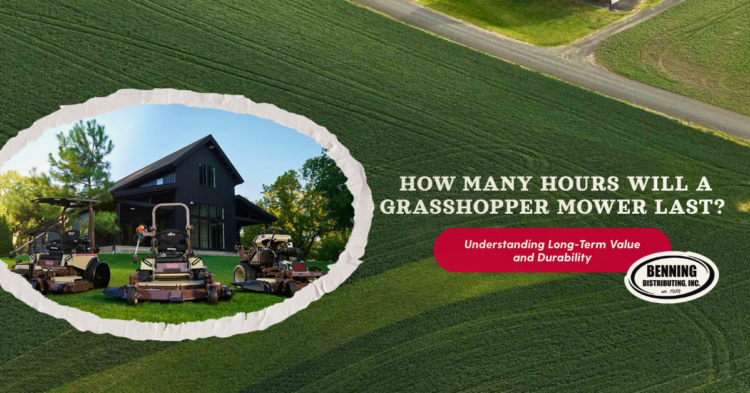
How Many Hours Will a Grasshopper Mower Last? Understanding Long-Term Value and Durability
When investing in a commercial-grade mower, one of the most important questions buyers ask is: How many hours will a Grasshopper mower last?
Whether you’re maintaining a few acres around your home or running a landscaping business throughout Illinois, purchasing a mower is a long-term investment. You want confidence that the machine will deliver reliable performance season after season.
The good news is that Grasshopper has built a reputation for producing some of the most durable mowers in the industry. With proper maintenance, it is not uncommon for a Grasshopper mower to exceed 3,000 to 5,000 operating hours, and many well-maintained units continue performing beyond that benchmark.
In fact, there are numerous examples of commercial operators using Grasshopper mowers that have accumulated thousands of hours while continuing to provide dependable cutting performance.
What Is the Average Grasshopper Mower Lifespan?
The lifespan of any mower depends on how it is used, maintained, and stored. However, Grasshopper machines are specifically engineered to handle demanding workloads that would quickly wear out lower-quality equipment.
For residential users, a Grasshopper mower may only accumulate 50 to 150 hours annually. At that rate, a properly maintained machine can provide decades of reliable service.
Commercial users often accumulate hundreds of hours each season. Even under these demanding conditions, many Grasshopper mowers remain productive for years thanks to their heavy-duty construction, durable drivetrains, and commercial-grade components. If you’re exploring available models, you can browse the current Grasshopper.
The key takeaway is simple: Grasshopper mowers are designed to be long-term assets rather than short-term purchases.
Why Grasshopper Mowers Are Known for Durability
One reason Grasshopper has earned such a loyal following is its commitment to durability.
Unlike many consumer-grade mowers, Grasshopper machines are built using commercial-quality materials and engineering standards. Components are designed to withstand extended operating hours, demanding terrain, and heavy seasonal workloads.
Their reputation for longevity comes from several factors:
- Commercial-grade engines
- Heavy-duty mower decks
- Durable transmissions and hydraulic systems
- Accessible maintenance points
- Proven engineering refined over decades
For operators throughout Illinois, where mowing seasons can be long and conditions can vary from flat residential lawns to rough commercial properties, durability becomes especially important.
A mower that consistently performs year after year reduces downtime, lowers replacement costs, and improves overall productivity.

Factors That Affect Grasshopper Mower Lifespan
While Grasshopper mowers are built to last, several factors can influence how many hours they ultimately achieve.
Maintenance Practices
Routine maintenance is by far the most important factor.
Regular oil changes, air filter replacements, blade maintenance, and hydraulic system servicing all contribute directly to machine longevity.
Operators who consistently follow recommended service schedules typically experience significantly longer equipment life than those who neglect routine upkeep.
Operating Conditions
Mowing smooth residential lawns places much less stress on a machine than maintaining rough commercial properties, municipal areas, or large acreages.
Grasshopper mowers are designed to handle demanding conditions, but operating environment still plays a role in overall wear and tear.
Storage
Proper storage helps protect critical components from weather-related damage.
Machines stored indoors or under cover generally experience less corrosion, UV damage, and deterioration over time.
Operator Habits
Consistent operation, proper startup procedures, and avoiding unnecessary strain on the equipment can all help extend mower lifespan.
Small habits often have a significant impact when accumulated over thousands of operating hours.
Commercial vs Residential Usage Expectations
One common misconception is that all mower hours are equal.
A residential owner may use a mower once a week during mowing season, while a commercial operator may run the machine several hours every day.
For homeowners, a Grasshopper mower often represents a long-term investment that can provide decades of dependable performance.
For commercial operators, the focus is often on maximizing productivity and minimizing downtime. Even when accumulating hundreds of hours annually, Grasshopper mowers consistently demonstrate the durability required to support demanding professional operations.
This is one reason many landscaping businesses continue investing in Grasshopper equipment as they expand their fleets.
Real-World High-Hour Grasshopper Examples
One of the strongest indicators of Grasshopper durability is the number of high-hour machines still operating successfully today.
Across the country, operators frequently report Grasshopper mowers surpassing:
- 3,000 hours
- 4,000 hours
- 5,000 hours
- And in some cases, even more
While individual results vary depending on maintenance and usage, these examples demonstrate the platform’s ability to provide reliable performance over the long term.
This level of longevity is particularly valuable for Illinois property owners and businesses looking to maximize return on investment.
Long-Term Value Goes Beyond Hours
While operating hours are important, the true value of a mower extends beyond a simple number.
A mower that lasts thousands of hours while maintaining productivity, reliability, and cutting quality provides significantly more value than a machine that requires frequent repairs or replacement.
Grasshopper mowers are designed to reduce downtime, simplify maintenance, and support long-term ownership. This helps operators lower overall equipment costs while improving efficiency year after year.
According to equipment management insights from the Outdoor Power Equipment Institute, consistent maintenance and proper operation play a critical role in maximizing equipment lifespan and long-term performance.
When paired with Grasshopper’s durable design, these practices help owners maximize their investment for many years.

Why Illinois Operators Trust Grasshopper
Illinois presents unique mowing challenges. Long growing seasons, changing weather conditions, and a mix of residential, agricultural, and commercial properties demand equipment that can perform consistently.
Grasshopper mowers have earned the trust of local operators because they are built for exactly these kinds of conditions.
Whether maintaining a large rural property, managing municipal grounds, or operating a commercial landscaping business, owners appreciate the confidence that comes from using equipment known for reliability and longevity.
Ready to Invest in a Mower Built to Last?
If you’re looking for a mower that can deliver thousands of hours of dependable performance, Grasshopper continues to be one of the strongest investments available.
Explore current inventory, compare available models, and learn more about finding the right mower for your property by contacting the team at Benning Distributing.
A quality mower should serve you for years, not just seasons. Grasshopper is built with exactly that goal in mind.